we live in a world where Google has its hands in almost everything we do online: from searches and emails to maps and even our smartphones. but this convenience comes at a hidden cost: our privacy. the more we use Google, the more it collects data about us: our search history, location, even the content of our emails. this information is stored, analyzed, and used for targeted ads, giving Google significant control over our personal lives.
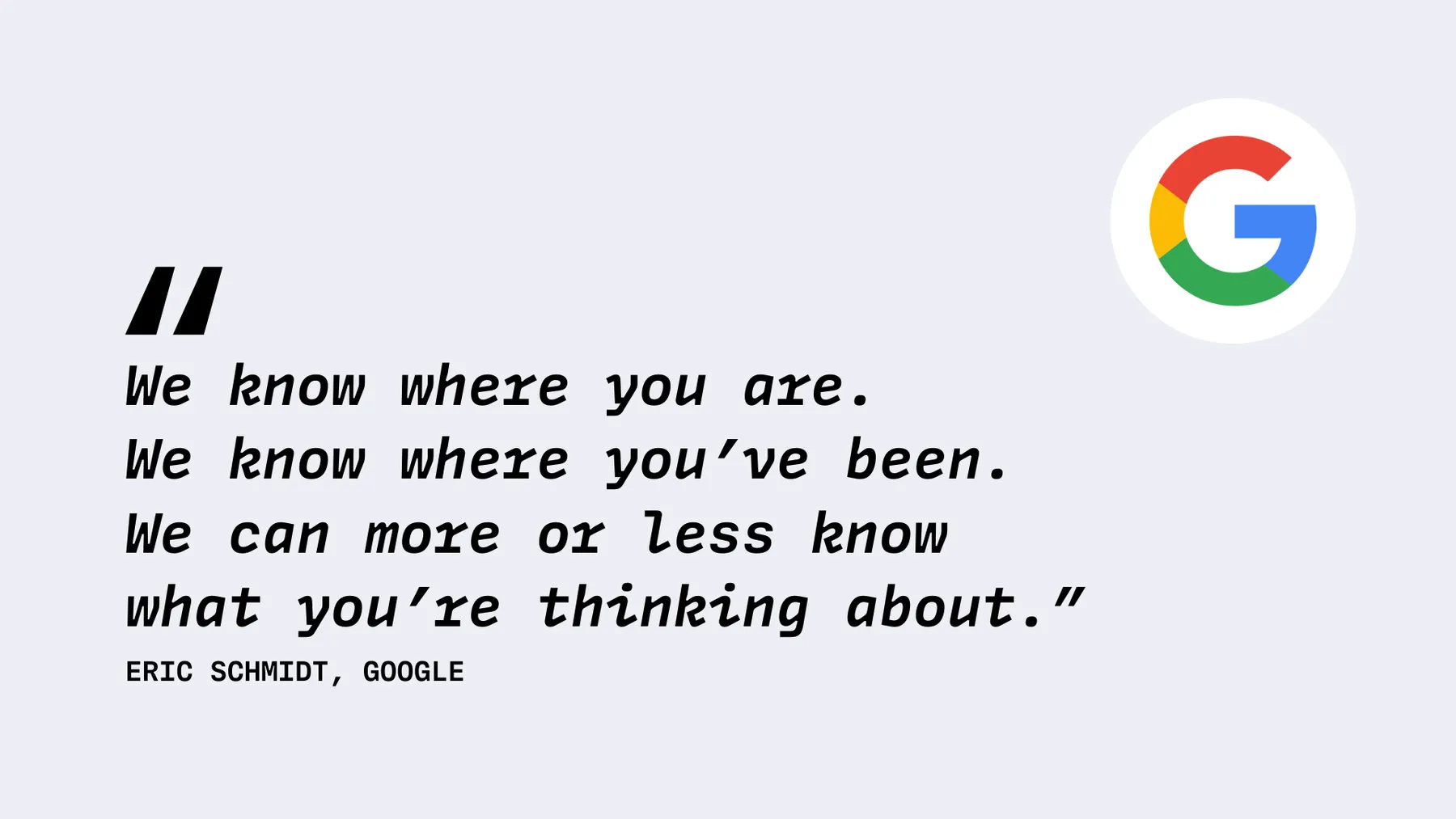
many people are starting to wake up to the fact that Google tracks nearly everything they do online. the data they collect does not just help show personalized ads. it builds a detailed profile of you. this is not just about search queries. Google also knows where you go, who you talk to, what you buy, what you watch, and what you like. it is a level of tracking that goes far beyond what most people realize, and it is happening continuously, across every service, on every device.
degoogling is about reducing dependence on Google and finding alternatives that give you more control over your data. it is about choosing services that prioritize privacy and allow you to live more independently in the digital world. it is not about rejecting technology. it is about using it more consciously.
for most people, degoogling is not a single action but a gradual process. it starts with noticing which Google services you rely on daily: search, email, maps, cloud storage, the browser, the phone operating system itself. each of these has alternatives that do not build a profile of you in the background.
switching to email services like ProtonMail or Tuta instead of Gmail, using OpenStreetMap instead of Google Maps, or choosing Brave or Firefox over Chrome are all steps that reduce the amount of data flowing toward Google's servers. none of these changes require technical expertise. they just require the decision to care about where your data goes.
the deeper layer is the phone itself. most Android devices come pre-loaded with Google services deeply embedded into the operating system. these services run constantly in the background, reporting location, usage patterns, and device state. degoogled Android operating systems like GrapheneOS, CalyxOS, or /e/OS are built specifically to remove this dependency while keeping the Android ecosystem usable.
not all Android-based operating systems are equal when it comes to privacy and freedom. the comparison below, sourced from eylenburg.github.io, lines up the major degoogled Android options side by side across criteria like FOSS status, network controls, app installation freedom, and more.
| criterion | GrapheneOS | CalyxOS | IodéOS | /e/OS | LineageOS | Stock Android |
|---|---|---|---|---|---|---|
| fully open source | ✓ | ✓ | ✓ | ✓ | ✓ | ✗ |
| network controls per app | full (direct + indirect) | partial | partial | partial | partial | ✗ |
| install apps from any source | ✓ | ✓ | ✓ | ✓ | ✓ | restricted (from 2026) |
| tracker/connection blocking | Private DNS / VPN | Private DNS / VPN | built-in iodé blocker | Private DNS / VPN | Private DNS / VPN | Private DNS / VPN |
| Google Play Services | sandboxed (optional) | microG | microG | microG | none | privileged (full) |
| duress PIN (wipe device) | ✓ | ✗ | ✗ | ✗ | ✗ | ✗ |
| E2E encrypted backups | ✓ Seedvault | ✓ Seedvault | ✓ Seedvault | ✓ Seedvault | ✓ Seedvault | requires Google login |
| call recording | ✓ all regions | selected regions | ✓ all regions | selected regions | selected regions | by region & manufacturer |
GrapheneOS is the strongest option if your goal is genuine security and privacy. it runs Google Play Services in a sandboxed environment rather than giving them system-level access, it adds network controls per app that no other ROM matches, and features like the duress PIN exist nowhere else in the Android space. it is built for people who want real control, not the appearance of it.
CalyxOS is a softer landing. it uses microG as a Google compatibility layer, which means more apps work out of the box, but it comes with tradeoffs around how deeply Google infrastructure is still involved. for people who are just starting to degoogle, the experience is more familiar while still being meaningfully better than stock Android.
LineageOS is the widest in terms of device support. it runs on hundreds of devices that manufacturers no longer update, which makes it an option for extending the useful life of older hardware. it strips out most Google services by default, but it offers fewer privacy-specific features compared to GrapheneOS or CalyxOS.
/e/OS and IodéOS both target a more mainstream audience. they come with their own app stores and cloud services designed to replace Google equivalents. IodéOS adds a built-in tracker blocker that works at the system level, which is useful for people who do not want to think about configuring DNS or VPN settings manually.
degoogling a phone is one part of a larger shift. the same principle applies to every layer of your digital life. using a privacy-respecting browser, moving email off Gmail, choosing a search engine that does not build a profile, self-hosting services instead of relying on platforms that monetize access. all of these reduce the surface area through which data about you is collected and sold.
by degoogling, you take steps to protect your digital privacy. you get to choose how much information you want to share and with whom. it is also about supporting better alternatives that respect your rights: services that are open source, secure, and transparent about what they do with your data.
choosing privacy-respecting alternatives might take a little adjustment at first. but the awareness that comes with it changes how you see technology in general. you stop thinking of apps and services as neutral tools and start seeing them as systems with behavior patterns, incentives, and consequences.
at the end of the day, degoogling is about reclaiming control over your personal information and ensuring that your online life remains your own. it is not about cutting yourself off from the digital world entirely. it is about making smarter, more deliberate choices about the tools you use and the data you hand over.
the more people use services that care about privacy, the more we collectively push back against the growing trend of surveillance and data exploitation. it starts with one decision, then another, and over time those decisions add up into a genuinely different relationship with technology.